Grease Trap Cleaning Near Me in Boston, Massachusetts
Grease trap cleaning and pumping for restaurants and commercial kitchens across Boston. Rosa answers 24/7, qualifies urgency, and confirms the soonest available window with a local licensed pumper where capacity allows.
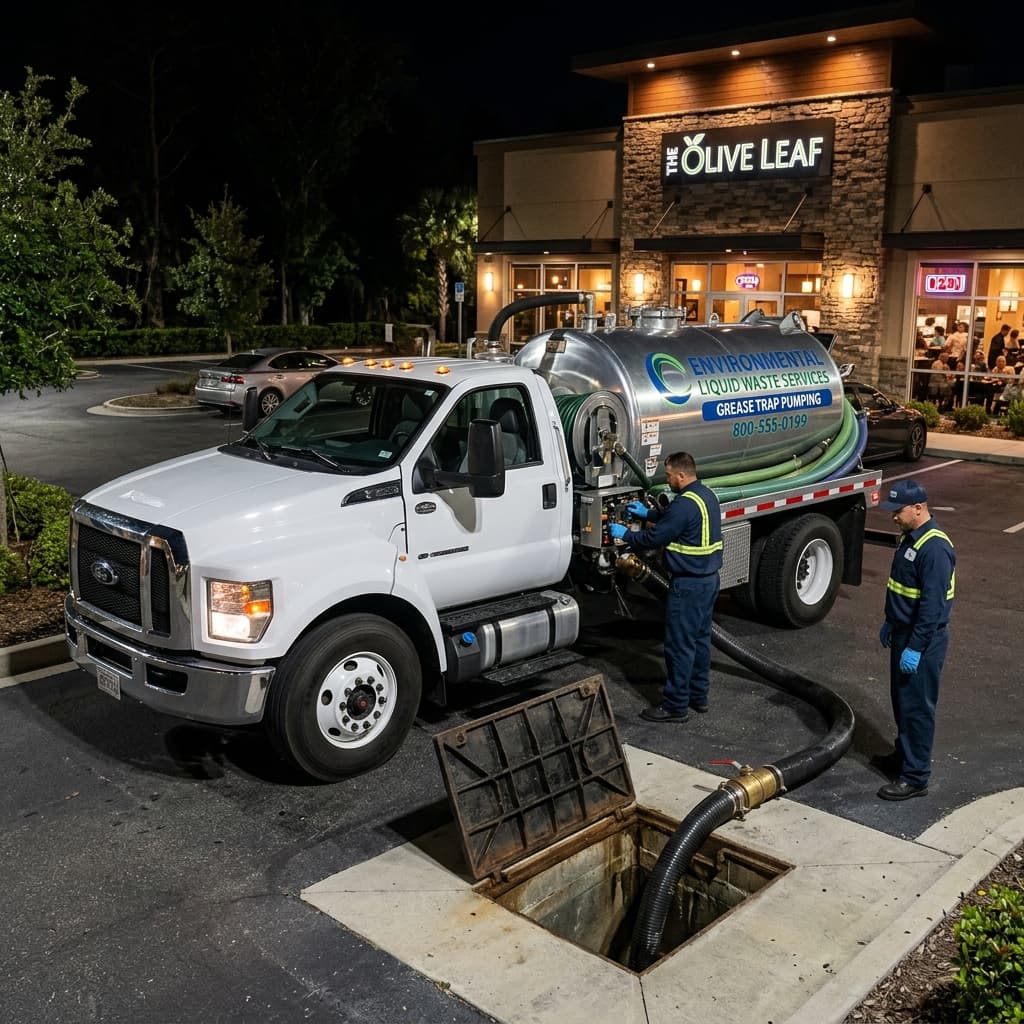
Emergency Grease Trap Coordination
When your trap overflows in Boston, call Rosa — she qualifies urgency and confirms the soonest available window with a local licensed pumper where capacity allows. We do not promise a fixed truck ETA everywhere.
Massachusetts FOG Documentation
We auto-generate FOG manifests that satisfy Massachusetts health department requirements. Our AI helps track service schedules and organize manifests for your records. Compliance determinations remain with the authority having jurisdiction and the qualified local provider.
Why Choose GreaseTrapDispatch
Rosa answers 24/7, qualifies urgency, and confirms the soonest available window with a local licensed pumper. Services are fulfilled by independent affiliates — not our own trucks.
Software helps organize manifests and service schedules. Compliance determinations remain with the authority having jurisdiction and the qualified local provider.
Services in Boston
- ✓Grease trap pumping (all sizes: 20–2,500 gal)
- ✓Emergency overflow intake — soonest available pumper
- ✓Recurring 30/60/90-day cleaning schedules
- ✓FOG manifest documentation workflows
- ✓Service schedule reminders
- ✓Grease interceptor inspection coordination
- ✓Line jetting for chronic buildup (via partners)
- ✓24/7 AI receptionist (Rosa) — callback/confirm first
Grease Trap Installation & Replacement in Boston
Frequent backups often lead restaurant owners to search for grease trap installation or grease trap replacement in Boston. Before you spend thousands on a new system, let our team perform a deep cleanout and high-pressure line jetting. In many cases, what appears to be a failing interceptor just needs professional grease trap cleaning and a strict quarterly pumping schedule.
If your system is cracked or structurally compromised and you truly need a replacement, we can refer you to trusted, certified plumbers in Massachusetts who specialize in commercial grease trap installation, while we continue to handle your ongoing FOG compliance.
Grease Trap FAQ — Boston
Where can I get grease trap cleaning near me in Boston?
Call Rosa 24/7 — she qualifies urgency for grease trap cleaning near you in Boston and confirms the soonest available pump-out with a local licensed pumper when capacity allows. We do not promise a fixed truck ETA everywhere.
How much does grease trap pumping cost in Boston?
Standard pumping in Boston costs $275–$450 for a 50-gallon under-sink unit. Larger interceptors (500+ gal) range $600–$1,200. GreaseTrapDispatch offers transparent quote ranges — call Rosa 24/7 for pricing and confirmation of the soonest available window.
How often do restaurants need grease trap pumping in Massachusetts?
Most Massachusetts municipalities require pump-outs every 90 days. High-volume kitchens in Boston may need monthly service. Our AI tracks your schedule and sends reminders automatically.
Does GreaseTrapDispatch handle FOG manifests in Massachusetts?
Yes. We auto-generate certified FOG manifests that satisfy Massachusetts health department requirements — waste volume, trap dimensions, interceptor condition, and authorized disposal location. No manual paperwork.
Do you install or replace grease traps in Boston?
No. We specialize exclusively in emergency pumping, cleaning, and FOG compliance. We do not provide hardware installation or replacement services. We focus 100% on keeping your existing interceptor pumped and compliant.
Try Rosa, Boston's AI Booking Agent
Get a Free Boston Grease Trap Quote
Tell us your trap size and we'll send you an instant, no-obligation pumping quote for your Massachusetts restaurant.
How Do Boston Restaurants Handle Grease Trap Compliance and FOG Regulations?
<p>Boston's restaurant scene — from North End Italian kitchens to Seaport District seafood houses and the emerging food halls in the Fenway corridor — operates under FOG regulations enforced by the Boston Water and Sewer Commission (BWSC). The commission requires all food service establishments in Suffolk County to install and maintain grease interceptors, with cleaning mandated before traps reach 25% capacity. BWSC conducts compliance inspections and can issue fines and mandatory compliance orders for restaurants that contribute to grease-related sewer blockages.</p><p>Boston's restaurant density is highest in the North End, Back Bay, and the Seaport, where narrow streets and historic building infrastructure create unique servicing challenges — many traps sit in centuries-old basements accessed through steep stairways. The city's diverse food scene generates varied FOG profiles: North End trattorias produce olive oil-heavy waste, while Chinatown wok kitchens generate high-volume vegetable oil runoff. Boston's combined sewer system — which carries both stormwater and wastewater — makes FOG blockages especially hazardous, as overflows can discharge into Boston Harbor. Cambridge and Somerville have separate FOG programs across county lines. Harsh winters cause exterior traps to freeze, requiring insulated installations. Providers need confined-space capability for basement-level traps, winter-ready pumping equipment, and familiarity with BWSC's specific documentation requirements.</p>
Coverage Area Near Boston
We service restaurants and commercial kitchens across the Boston metro area. See our coverage for nearby cities: