Grease Trap Cleaning Near Me in Seattle, Washington
Grease trap pumping, cleaning, and FOG compliance for restaurants and commercial kitchens across Seattle. Same-day emergency service and scheduled maintenance — book 24/7.
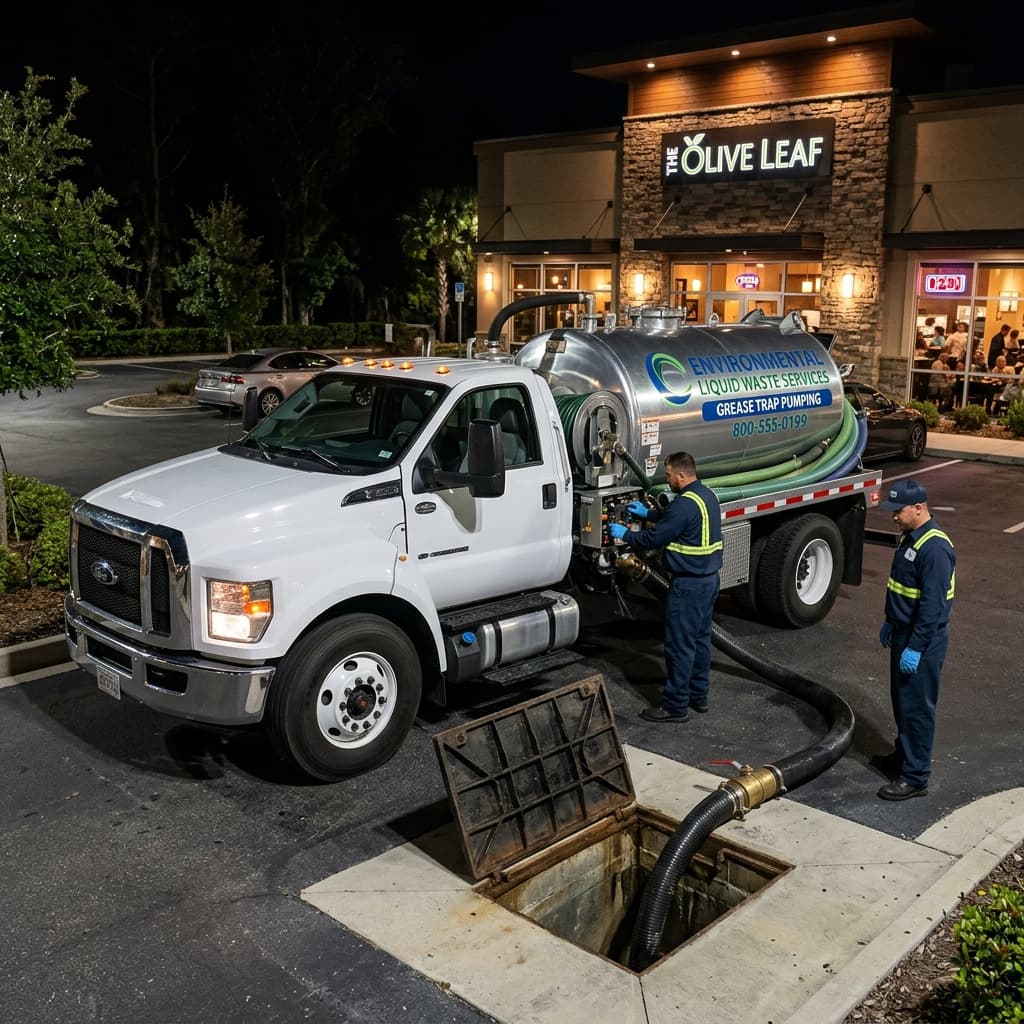
Emergency Grease Trap Pumping
Same-day emergency service available in Seattle. When your trap overflows, call Rosa and we dispatch a truck to prevent health code violations and kitchen shutdowns.
Washington FOG Compliance
Washington State Department of Ecology oversees FOG disposal. Municipalities require restaurants to keep pumping manifests on-site for a minimum of 3 years for health inspector review. Our AI tracks your cleaning schedule and sends reminders before your next mandated service date — no more compliance surprises. Washington's focus on protecting local waterways like Puget Sound means zero-tolerance for FOG-related sewer blockages, with heavy fines for non-compliant kitchens.
Why Choose GreaseTrapDispatch
Our AI booking agent Rosa handles all scheduling, dispatching, and FOG manifest generation automatically. Call anytime — 24/7, 29+ languages.
FOG manifests auto-generated after every pump-out. We track your cleaning schedule and send reminders before your next mandated service date.
Services in Seattle
- ✓Grease trap pumping (all sizes: 20–2,500 gal)
- ✓Emergency overflow response — same day
- ✓Recurring 30/60/90-day cleaning schedules
- ✓Automated FOG manifest generation
- ✓Health department compliance tracking
- ✓Grease interceptor inspection & reporting
- ✓Line jetting for chronic buildup
- ✓24/7 AI receptionist (Rosa) — books instantly
Grease Trap Installation & Replacement in Seattle
Frequent backups often lead restaurant owners to search for grease trap installation or grease trap replacement in Seattle. Before you spend thousands on a new system, let our team perform a deep cleanout and high-pressure line jetting. In many cases, what appears to be a failing interceptor just needs professional grease trap cleaning and a strict quarterly pumping schedule.
If your system is cracked or structurally compromised and you truly need a replacement, we can refer you to trusted, certified plumbers in Washington who specialize in commercial grease trap installation, while we continue to handle your ongoing FOG compliance.
Grease Trap FAQ — Seattle
How much does grease trap pumping cost in Seattle?
Standard pumping in Seattle costs $320–$490 for a 50-gallon under-sink unit. Larger interceptors (500+ gal) range $680–$1,350. GreaseTrapDispatch offers transparent pricing — call Rosa 24/7 for an instant quote.
How often do restaurants need grease trap pumping in Washington?
Most Washington municipalities require pump-outs every 90 days. High-volume kitchens in Seattle may need monthly service. Our AI tracks your schedule and sends reminders automatically.
Does GreaseTrapDispatch handle FOG manifests in Washington?
Yes. We auto-generate certified FOG manifests that satisfy Washington health department requirements — waste volume, trap dimensions, interceptor condition, and authorized disposal location. No manual paperwork.
Do you install or replace grease traps in Seattle?
No. We specialize exclusively in emergency pumping, cleaning, and FOG compliance. We do not provide hardware installation or replacement services. We focus 100% on keeping your existing interceptor pumped and compliant.
Try Rosa, Seattle's AI Booking Agent
Get a Free Seattle Grease Trap Quote
Tell us your trap size and we'll send you an instant, no-obligation pumping quote for your Washington restaurant.
What Are Seattle's Grease Trap Cleaning Requirements for Restaurants?
<p>Seattle's dining scene — from Pike Place Market seafood restaurants to Capitol Hill's diverse restaurant row and the international food corridor along Rainier Avenue — operates under FOG regulations enforced by Seattle Public Utilities (SPU) and King County's Industrial Waste Program. The city requires grease interceptors at all food service establishments, with cleaning mandated before traps reach 25% grease depth. SPU's FOG Source Control Program conducts inspections and tracks compliance, with escalating enforcement for non-compliant restaurants.</p><p>The Pacific Northwest's cool, wet climate affects grease trap dynamics differently than warmer markets. Cooler temperatures cause grease to solidify more completely in traps, which can be beneficial for trap efficiency but also means accumulated grease is harder and more difficult to pump when cleaning intervals are exceeded. Seattle's rainy season (October through May) can flood ground-level interceptors if drainage around the trap is inadequate, potentially washing FOG directly into the sewer system. The city's Asian food scene — Vietnamese, Thai, Chinese, Japanese, and Korean restaurants concentrated in the International District and along Aurora Avenue — generates diverse FOG profiles that require tailored trap sizing. Seattle's environmental values make cooking oil recycling and biodiesel conversion programs more prevalent here than in most cities. Washington State's L&I requirements for confined-space entry apply to below-grade interceptor cleaning. Bellevue, Kent, and Renton have their own utility-administered FOG programs. Providers in Seattle need rain-season operational capability, the environmental compliance credentials that Pacific Northwest clients expect, and the ability to service a restaurant market that increasingly demands sustainability in every aspect of its supply chain.</p>
Coverage Area Near Seattle
We service restaurants and commercial kitchens across the Seattle metro area. See our coverage for nearby cities: