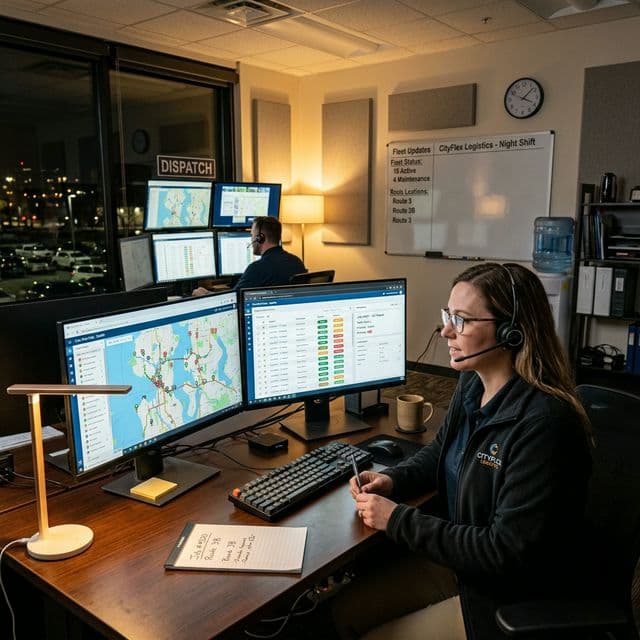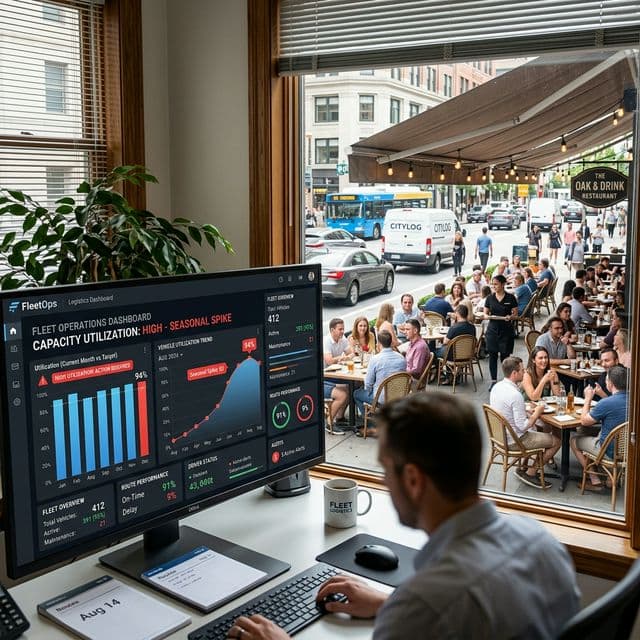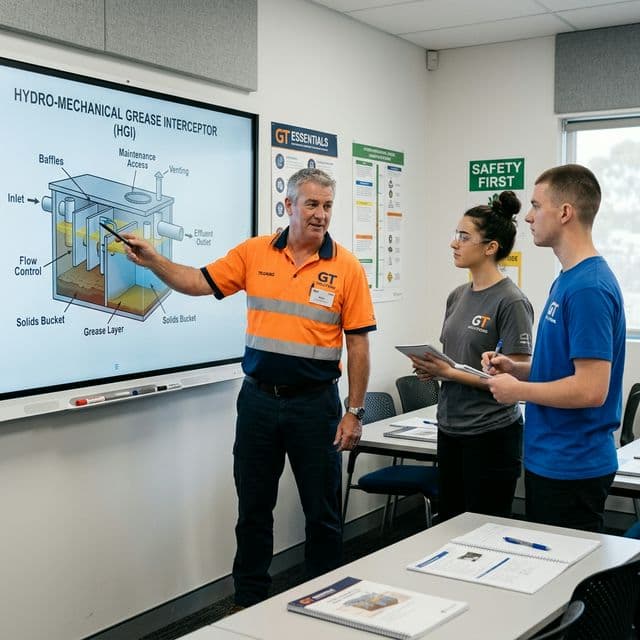
A backed-up grease trap at 2:00 AM means a flooded kitchen and a panicked restaurant manager desperately calling every pumping company in the area. If your business goes straight to voicemail, you lose the job instantly. DispatchNode deploys a specialized AI voice agent that answers every after-hours emergency call, quotes premium rates, and dispatches an on-call driver while your competitors sleep.
The After-Hours Revenue Leak
Commercial kitchens operate late into the night, meaning grease trap failures frequently occur long after standard business hours. DispatchNode eliminates after-hours revenue leakage by providing a fully autonomous AI receptionist that captures high-margin emergency service requests twenty-four hours a day, ensuring your pumping operation never misses a critical dispatch opportunity.
Traditional answering services are woefully inadequate for the specialized nature of FOG (Fats, Oils, and Grease) management. A generic call center agent cannot distinguish between a minor odor complaint and a catastrophic interceptor overflow. They simply take a message and page the on-call technician, causing dangerous delays. The AI agent, trained specifically on grease trap terminology, instantly categorizes the severity of the inbound call.
When a panicked chef calls, the AI asks precise triage questions. "Is the backup actively overflowing into the kitchen? Are floor drains affected?" Based on the responses, the system categorizes the call as a Level 1 Emergency. This triggers an automated protocol that instantly calculates the emergency dispatch premium and alerts the designated on-call technician via an aggressive mobile app notification.
This 24/7 availability creates an insurmountable competitive moat. Restaurant groups and massive commercial facilities prioritize vendors who can guarantee immediate, intelligent responses at any hour. By deploying an AI agent that speaks multiple languages and understands the technical realities of commercial plumbing, operators position themselves as the premium, utterly reliable choice in their local market.
Intelligent Triage and Quoting
Not every after-hours call requires a thousand-dollar emergency dispatch. DispatchNode utilizes natural language processing to intelligently triage incoming requests, separating genuine plumbing emergencies from routine service inquiries or billing questions, ensuring that expensive on-call technicians are only deployed for high-revenue crises.
If a caller is simply asking to reschedule next week's preventative maintenance, the AI agent handles the request automatically, accessing the calendar database and proposing alternative dates without ever disturbing the sleeping staff. However, if the caller explicitly states they have a massive backup, the system pivots immediately into emergency response mode.
The agent is authorized to quote dynamic pricing based on the hour. A pump-out at 8:00 PM might carry a two-hundred-dollar surcharge, while a dispatch at 3:00 AM carries a five-hundred-dollar premium. The AI clearly communicates these terms to the caller, preventing any miscommunication or sticker shock when the invoice is generated.
Furthermore, the system requires the caller to accept the terms verbally or via a rapid SMS confirmation before the driver is dispatched. The AI explicitly states, "To dispatch the truck immediately, please confirm the emergency rate of eight hundred dollars by replying 'YES' to the text message I just sent." This guarantees that the operator is legally protected and financially compensated for the late-night deployment.
Coordinating the On-Call Driver
Dispatching a driver in the middle of the night requires smooth communication and perfect routing data to minimize response times. DispatchNode automatically awakens the assigned on-call technician by pushing a high-priority alert to their mobile device, containing the exact GPS coordinates, access codes, and severity level of the grease trap emergency.
Waking up a technician and conveying complex instructions over a groggy phone call is a recipe for disaster. The AI eliminates the middleman. Once the client confirms the emergency rate, the system injects the work order directly into the driver's app. The alert overrides the phone's silent mode, ensuring the driver is awakened immediately.
The work order contains everything the driver needs to execute the pump-out flawlessly. It includes the size of the trap, its exact location on the property (e.g., "Behind the dumpster enclosure, key code 1234"), and the contact information of the manager on site. The routing algorithm provides the fastest path to the restaurant, bypassing standard traffic protocols to ensure the absolute fastest arrival time.
As the driver boots up the pump truck and begins the route, the system automatically sends a live tracking link to the restaurant manager. This transparency is important during an emergency; knowing exactly how many minutes away the truck is allows the kitchen staff to manage the flooding and prepare the site for immediate service.
Post-Emergency Compliance Reporting
Emergency pump-outs still require strict adherence to municipal FOG regulations and manifest generation. DispatchNode automates the compliance reporting process, instantly generating a digital manifest upon completion of the late-night service and automatically transmitting it to the local health department or municipal water authority, keeping the restaurant legally compliant.
When the exhausted driver finishes pumping the trap at 4:00 AM, the last thing they want to do is fill out complex paperwork. The mobile app requires only a few clicks. The driver inputs the volume of grease extracted and notes any structural damage to the interceptor. The system cross-references this with the truck's GPS data to generate an immutable, timestamped digital manifest.
This manifest is immediately emailed to the restaurant manager and uploaded to the client portal. If the municipality requires electronic reporting through a specific FOG compliance database, the platform integrates via API to submit the report automatically. This ensures that the restaurant does not face additional fines from the city on top of their plumbing disaster.
By smoothly handling the initial call, executing dynamic pricing, coordinating the driver, and finalizing the compliance paperwork entirely through automation, the pumping company provides an unparalleled level of service. The operator wakes up the next morning to discover that a high-margin emergency job was booked, executed, and billed while they were sleeping, demonstrating the massive ROI of AI automation.
AI Call Classification Matrix
| Caller Statement | AI Classification | Action Triggered | Priority |
|---|---|---|---|
| "Kitchen drain is backing up" | Active Overflow | Immediate dispatch | P0 |
| "Health inspector cited us" | Compliance Emergency | Same-day dispatch | P1 |
| "Need a pump-out this week" | Scheduled Service | Queue for next route | P2 |
| "Want to set up regular service" | New Contract Lead | Route to sales pipeline | P3 |
The AI must distinguish between true emergencies requiring immediate truck dispatch and routine requests that can be scheduled. Misclassifying a P0 as a P2 costs the restaurant thousands in lost revenue from kitchen downtime. The EPA reports that grease-related sewer blockages cause approximately 47% of all sanitary sewer overflows in the United States.
Emergency Service Call Flow
The AI's access to the service history database is critical. Knowing the trap size and last pump date allows the technician to arrive with the correct equipment and anticipate the volume of grease to be extracted.
Post-Emergency Follow-Up Protocol
- Compliance Report Generation: Automatically generate a pump-out report with date, volume extracted, and disposal manifest within 24 hours.
- Recurring Service Recommendation: The AI calls the restaurant 48 hours after the emergency to recommend a preventive maintenance schedule.
- Health Department Documentation: Provide the restaurant with a signed manifest they can present to the health inspector as proof of remediation.
- Root Cause Analysis: Document the likely cause of the overflow (skipped maintenance, undersized trap, staff training gap).
- Contract Conversion: Convert emergency-only customers into recurring maintenance contracts within 30 days of the initial call.
For more on scheduling software, read our guide on Best Scheduling Software for Grease Trap Companies.
Real-Time Sentiment Analysis in Crisis Scenarios
The psychology of a customer calling to report an overflowing grease trap is fundamentally different from a customer calling to schedule routine maintenance. The caller—often a restaurant owner or general manager—is experiencing extreme acute stress. Raw sewage may be backing up into their prep kitchen during the Friday dinner rush. Their business is actively losing money, and their reputation is hemorrhaging with every customer who smells the issue.
When this highly agitated customer interacts with a traditional answering service, the interaction frequently degrades. The human operator at the answering service, reading from a generic script and lacking specific FOG industry knowledge, asks repetitive questions or fails to convey an appropriate sense of urgency. This exasperates the caller, often leading them to hang up and dial a competitor in sheer frustration.
Modern FOG-specific AI voice agents deploy advanced real-time sentiment analysis to prevent this lead abandonment. As the caller speaks, the AI's natural language processing engine analyzes not just the words, but the acoustic properties of the voice—cadence, volume, and pitch variance. If the AI detects elevated stress or panic, it instantly modifies its own conversational parameters.
The AI shifts its vocal tone to project calm authority. It abandons conversational pleasantries and transitions into a rapid-triage protocol. Instead of saying, "Thank you for calling, how may I assist you today?", the AI interjects, "I understand you have an active overflow. Our priority is getting a pump truck to your location immediately. Please confirm the street address of the restaurant."
By mirroring the urgency of the situation while maintaining absolute operational calm, the AI establishes immediate psychological control over the interaction. The caller perceives that they are speaking to a highly competent emergency dispatcher rather than a generic receptionist. This psychological anchoring drastically increases the probability that the customer will authorize the premium emergency dispatch fee, trusting that the AI is fully capable of resolving their crisis.
Automated Liability Mitigation and Documentation
Emergency service calls in the FOG industry carry a disproportionately high risk of post-service liability claims. When a restaurant is flooded with grease and wastewater, the ensuing damage to drywall, flooring, and kitchen equipment can reach tens of thousands of dollars. Restaurant owners, desperate to recoup their losses, may attempt to hold the pump truck operator liable, claiming the technician caused the damage during the extraction process or failed to respond quickly enough to prevent the overflow from spreading.
Protecting the operator from these catastrophic claims requires airtight, immutable documentation of the entire emergency response timeline. AI dispatch platforms serve as the foundation of this liability mitigation strategy by generating an unbreakable digital chain of custody from the very first ring of the phone.
Because the AI handles the intake call, a flawless, time-stamped transcript and audio recording of the conversation is instantly generated. If the restaurant owner later claims they called at 4:00 PM but the truck didn't arrive until 6:00 PM, the operator can produce the digital record proving the call actually occurred at 5:15 PM, and the truck arrived in forty-five minutes.
Furthermore, the AI automatically pushes a specialized "Emergency Extraction Protocol" checklist to the responding technician's mobile device. Before the technician is permitted to engage the vacuum pump, the software forces them to capture time-stamped, geolocated photographs of the pre-existing damage in the kitchen. The technician must also secure a digital signature from the restaurant manager on a specific emergency liability waiver right on the tablet screen.
This automated, software-enforced workflow guarantees that the operator's legal protections are in place before any physical work begins. By removing the burden of compliance from the stressed technician and embedding it directly into the AI-driven dispatch architecture, the operator insulates their business against fraudulent claims that could otherwise devastate their annual profit margin.
The integration of the AI emergency response system with the operator's inventory management module provides a critical safeguard against secondary operational failures. In extreme biological hazard scenarios, such as a major Category 3 SSO, technicians require specialized personal protective equipment (PPE), heavy-duty biocides, and sometimes localized containment booms to prevent the FOG from reaching municipal storm drains. When the AI categorizes an inbound call as a severe hazard, it automatically queries the inventory database of the selected pump truck. If the truck lacks the necessary containment booms or specialized hazmat suits, the AI instantly flags the deficiency to the operations manager before the truck arrives on site. The manager can then dispatch a secondary support vehicle carrying the required safety equipment. This automated inventory verification ensures that technicians are never thrust into a hazardous environment without the necessary tools, protecting the workforce from injury and shielding the company from severe OSHA violations.