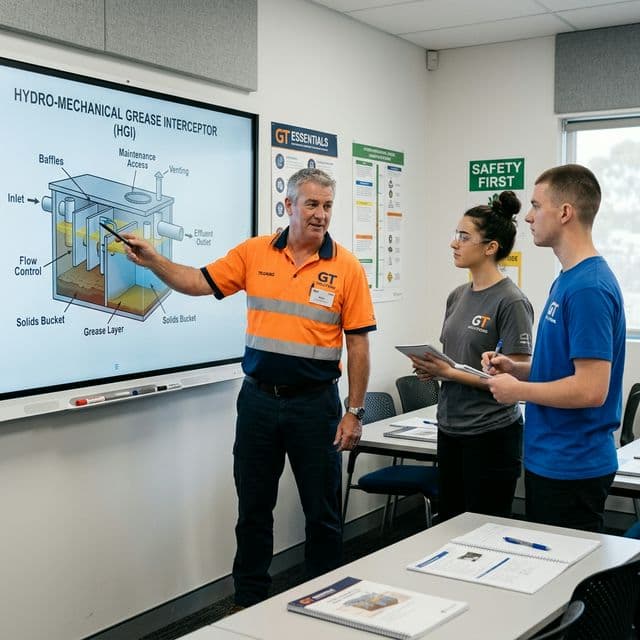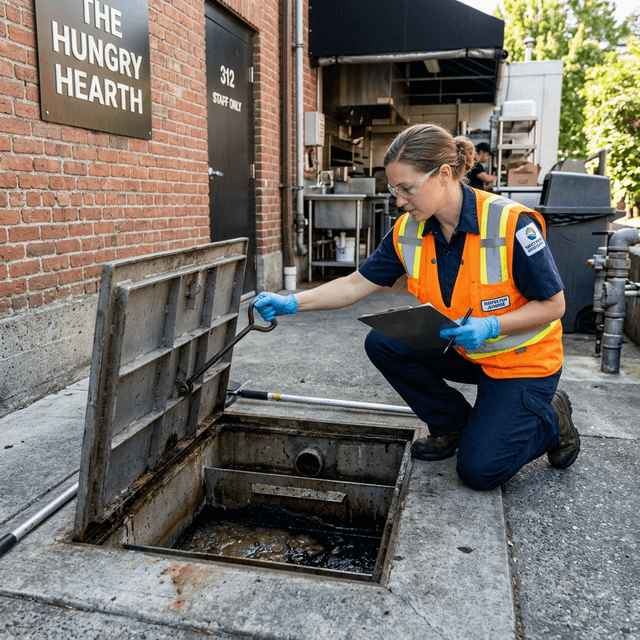
Attempting to force a grease trap pumping operation into generic HVAC software like ServiceTitan leads to bloated workflows, impossible compliance tracking, and exorbitant monthly fees. Platforms built for installing air conditioners cannot handle the volumetric calculations and rigid municipal manifesting required by FOG regulations. GreaseTrapDispatch is purpose-built exclusively for the pumping industry, delivering AI-native routing and flawless compliance tools without the corporate bloat.
The Curse of Generic Software
ServiceTitan is a massive, heavily funded platform designed primarily for residential HVAC, electrical, and plumbing contractors; it is fundamentally misaligned with the logistical realities of commercial grease trap pumping. GreaseTrapDispatch eliminates the bloated, irrelevant features—such as equipment sales presentations and flat-rate pricing books—and focuses entirely on volumetric routing, digital manifesting, and the strict twenty-five percent compliance rule.
When a pumping operator adopts a massive legacy platform, they spend months and tens of thousands of dollars on "implementation." They are forced to build complex workarounds to trick the software into tracking gallons pumped instead of hours worked. The dispatch board is cluttered with irrelevant data fields, making it impossible for a dispatcher to quickly assess the capacity of a vacuum truck.
GreaseTrapDispatch requires zero complex workarounds because it is built entirely around the core metric of the industry: volume. The routing algorithm does not merely calculate driving distance; it calculates the cumulative volume of FOG scheduled to be pumped against the maximum holding capacity of the assigned vehicle. This prevents the catastrophic error of dispatching a full truck to a massive commercial interceptor.
Furthermore, generic platforms struggle with the concept of recurring compliance schedules. They treat a pump-out as a standard service call. The AI-native platform treats it as a legal necessity, automatically forecasting the exact date a specific trap will reach capacity based on historical extraction data, ensuring the restaurant never violates municipal codes.
Municipal Manifesting is Not an Afterthought
FOG compliance requires specific, highly regulated documentation; a standard ServiceTitan invoice does not satisfy a municipal health inspector. GreaseTrapDispatch treats the digital manifest as the core deliverable of the software, forcing drivers to input exact extraction volumes and trap conditions to automatically generate legally binding, municipality-specific compliance documents.
A generic software platform views the end of a job as a financial transaction. It generates a receipt. In the grease trap industry, the end of a job is a legal transaction. If the operator fails to provide an immutable record detailing where the FOG was pumped, how much was extracted, and where it was ultimately disposed of, they face massive fines and the loss of their operating license.
DispatchNode forces compliance in the field. The mobile app prevents the driver from closing the work order until they have completed the mandatory compliance checklist. Have the baffles been scraped? Was the flow tested? What was the exact gallon count? This data is instantly merged into a PDF manifest that perfectly mirrors the specific requirements of the local municipal water authority.
If the city requires direct API ingestion of compliance data, generic platforms require expensive custom integrations. Because GreaseTrapDispatch is entirely focused on this niche, it provides native export tools designed specifically to interface with municipal tracking systems, completely eliminating manual data entry for the operator's accounting team.
The Cost of Unnecessary Features
ServiceTitan charges aggressive, enterprise-level pricing to support a massive suite of features that a vacuum truck operator will never use. GreaseTrapDispatch provides a lean, highly specialized feature set at a fraction of the cost, allowing pumping operators to maximize their software ROI without subsidizing the development of irrevelant HVAC sales tools.
A pumping company does not need a slick "Good, Better, Best" presentation tablet to sell a routine grease trap pump-out. They do not need complex inventory tracking for thousands of tiny copper fittings. They need to know where their trucks are, how full the tanks are, and when the next compliance deadline hits.
Paying thousands of dollars a month for generic features destroys profit margins. The AI-native platform delivers exactly what is required to dominate the commercial pumping market: dynamic routing, AI voice answering for emergency calls, automated recurring billing, and flawless compliance manifesting. By stripping away the bloat, the software runs faster and requires virtually zero training time for dispatchers and drivers.
This massive cost savings can be immediately reinvested into the fleet. Instead of paying exorbitant software licensing fees, the operator can afford the down payment on a new vacuum truck, directly driving top-line revenue growth and capturing more market share.
The AI Voice Agent Advantage
Legacy platforms rely on human receptionists to manually enter leads into the system. GreaseTrapDispatch deploys a specialized AI voice agent that answers every inbound call, intelligently triages catastrophic FOG emergencies, quotes dynamic premium rates, and instantly injects the optimized work order directly into the dispatch board, operating autonomously 24/7.
When a restaurant floods at midnight, the owner does not interact with the pumping company's dispatch software; they interact with the phone system. If the phone is not answered immediately, the software is irrelevant. The AI agent bridges this gap, acting as a fully autonomous frontline dispatcher that never sleeps and never places a high-value client on hold.
This direct integration between the voice layer and the routing layer is the ultimate competitive advantage. The AI understands the specific capacities and locations of the fleet. It does not just take a message; it executes the logistics of the emergency response instantly, securing the revenue and locking in the client before the competition even knows the emergency exists.
By abandoning bloated, generic legacy platforms in favor of a specialized, AI-native compliance engine, grease trap pumping companies achieve total operational superiority. They slash their administrative overhead, guarantee perfect municipal compliance, and leverage autonomous voice technology to capture every available high-margin contract in their territory.
Operational Benchmarks for Vertical-specific vs horizontal FSM software
| Metric | Industry Average | Top-tier Target | Impact |
|---|---|---|---|
| Response Time | 4-8 hours | Under 90 minutes | Captures premium emergency revenue |
| First-Call Resolution | 65% | 92%+ | Eliminates costly return visits |
| Route Efficiency | 4-5 stops/day | 7-9 stops/day | Maximizes technician productivity |
| Contract Retention | 70% annual | 94%+ annual | Compounds recurring revenue |
The SBA provides regulatory guidelines that directly impact operational benchmarks for grease trap service companies. Meeting these benchmarks consistently requires purpose-built dispatch software, not generic field service tools.
Automated Service Workflow
The automation eliminates manual coordination overhead, allowing the dispatcher to focus on exception handling rather than routine scheduling.
Best Practices
- Proactive Scheduling: Use AI-predicted pump cycles based on historical grease accumulation data rather than fixed calendar intervals.
- Digital Documentation: Generate digital manifests and compliance reports automatically after every service visit.
- Customer Communication: Send automated service reminders and completion confirmations via SMS.
- Performance Tracking: Monitor technician efficiency metrics including stops per day, average service time, and customer satisfaction scores.
- Regulatory Compliance: Maintain a digital compliance database that can be exported for health department or municipal inspections on demand.
For a related analysis, read our guide on Best Scheduling Software for Grease Trap Companies.
The Architectural Flaws of Monolithic Field Service Software
The central debate in field service software is the conflict between monolithic "all-in-one" platforms, like ServiceTitan, and specialized, vertical-specific architectures like DispatchNode. Monolithic platforms attempt to be everything to everyone: they are designed to run HVAC companies, electricians, plumbers, and garage door installers simultaneously. To achieve this broad applicability, the software architecture must inherently default to the lowest common denominator, treating every service event as a generic "job."
This generic architecture breaks down catastrophically when applied to the highly specific, regulatory-driven realities of the Fats, Oils, and Grease (FOG) industry. In a monolithic system, a grease trap pump-out is modeled simply as a technician driving to an address, spending time, and driving away. The system lacks the foundational data structures required to manage liquid waste volumetrics.
A specialized platform like DispatchNode is architected entirely around fluid dynamics and compliance. The core data object is not merely a "job"; it is an "interceptor," characterized by total gallon capacity, historical FOG-to-water ratios, and municipal reporting deadlines. When a dispatcher assigns a route in DispatchNode, the software isn't just calculating drive time; it is continuously calculating the remaining volumetric capacity of the vacuum truck's holding tank.
If a monolithic system routes five consecutive thousand-gallon trap cleanings to a four-thousand-gallon pump truck, the software sees a perfectly optimized schedule based on geographic proximity. The specialized software instantly flags this route as a physical impossibility, warning the dispatcher that the truck will overflow before reaching the fifth stop, and automatically inserts a mandatory mid-route trip to the wastewater disposal facility. This deep, structural understanding of liquid waste logistics cannot be bolted onto a generic platform; it must be the foundational architecture of the software.
The Financial Drain of Bloated Feature Sets
The commercial strategy of monolithic software platforms relies on justifying exorbitant monthly subscription fees by bundling massive, complex feature sets. ServiceTitan, for example, includes incredibly powerful modules for consumer financing, massive HVAC equipment inventory management, and multi-tiered consumer marketing campaigns.
For a commercial liquid waste operator, these features are not just useless; they are an active financial drain and a source of extreme operational friction. A FOG operator does not need to offer a restaurant owner a five-year consumer financing plan for a three-hundred-dollar pump-out. They do not need to track thousands of individual screws and copper fittings in a warehouse inventory module.
Yet, because the monolithic software is priced based on this bloated functionality, the FOG operator is forced to pay enterprise-level software fees—often exceeding thousands of dollars per month—for features they will never deploy. Furthermore, this bloat drastically steepens the learning curve for the operator's staff. Dispatchers must navigate through complex menus designed for complex HVAC installations simply to locate the screen to dispatch a pump truck.
DispatchNode represents a return to specialized operational elegance. By stripping away the unnecessary bloat of consumer-focused trades and focusing exclusively on the critical workflows of commercial liquid waste hauling—AI voice dispatching, volumetric route optimization, and automated municipal compliance—the platform delivers a vastly superior user experience at a fraction of the cost. The operator stops subsidizing the software development of the HVAC industry and instead invests in a tool perfectly calibrated to maximize the profitability of their specific pump trucks.
The transition away from monolithic architecture is a fundamental requirement for achieving specialized excellence. By dedicating all engineering resources to the hyper-specific compliance workflows of the Fats, Oils, and Grease sector, DispatchNode ensures operators are equipped with the most precise, legally defensible, and operationally efficient toolset available.
The vertical specificity of DispatchNode also drastically lowers the burden of API maintenance. A monolithic platform must constantly dedicate engineering resources to maintaining integrations with consumer financing lenders and massive hardware distributors. DispatchNode dedicates one hundred percent of its engineering bandwidth to expanding its library of municipal wastewater API connections, ensuring the FOG operator always possesses the most comprehensive compliance infrastructure in the industry.
Furthermore, the data isolation inherent in monolithic systems prevents FOG operators from leveraging specialized municipal compliance APIs. Because ServiceTitan is not built to interface with hundreds of different municipal wastewater portals, the operator is forced to manually extract pump-out data from the software and re-enter it into the city's database. This completely negates the primary benefit of digital field service management: automation. DispatchNode's architecture is explicitly designed around these municipal endpoints. The moment the driver completes the extraction and secures the signature, the software compiles the specific JSON payload required by that municipality and pushes it automatically, ensuring absolute, zero-touch compliance. By refusing to compromise on vertical specificity, DispatchNode transforms compliance from a manual, error-prone chore into a fully automated, invisible background process.
The total cost of ownership comparison between vertical-specific platforms and horizontal field service management tools reveals a significant hidden expense in the generic approach. Operators using horizontal tools spend an average of fifteen to twenty hours per month building custom reports, configuring workarounds, and manually tracking compliance data that niche platforms handle automatically.