Relying on ad-hoc emergency calls is a highly stressful, unpredictable business model that caps your growth potential. Pumping operators who wait for traps to overflow suffer from erratic cash flow and chaotic routing schedules. DispatchNode transitions your business to a highly profitable recurring revenue model by automating preventive maintenance schedules, guaranteeing stable cash flow, maximized route density, and absolute dominance in your local market.
The Stability of Recurring Revenue
The financial valuation of a grease trap pumping business is determined by the volume of contracted, recurring monthly revenue, not the total number of erratic emergency jobs performed. DispatchNode provides the automated scheduling infrastructure necessary to build and manage hundreds of preventive maintenance contracts, instantly transforming unpredictable cash flow into a rock-solid financial baseline.
An operation built on emergency response is constantly reacting. The owner does not know if they will generate five thousand dollars or twenty thousand dollars in a given week. This financial instability makes it impossible to secure financing for fleet expansion or confidently hire new technicians. The business is permanently stuck in survival mode.
Preventive maintenance contracts flip this dynamic. When an operator secures a restaurant on a recurring quarterly or monthly schedule, that revenue is mathematically guaranteed. The AI software automatically generates the work orders and processes the recurring credit card payments on the first of the month, ensuring the business is fully funded before the trucks even leave the yard.
This predictable cash flow empowers aggressive strategic growth. The business owner can accurately forecast their revenue six months into the future, allowing them to proactively order new vacuum trucks to handle the anticipated volume, rather than scrambling to find rental equipment when the fleet is suddenly overwhelmed by a massive influx of new commercial clients.
Maximizing Route Density and Margins
Scheduled preventive maintenance allows operators to achieve maximum route density, which is the single most important metric for driving profitability in the pumping industry. DispatchNode algorithmically clusters recurring contracts geographically, allowing a single vacuum truck to pump massive volumes of FOG within a highly compressed geographic radius, drastically reducing fuel consumption and labor costs.
Emergency dispatches are inherently inefficient. A truck must frequently cross the entire city to resolve a single backup, burning expensive diesel fuel and wasting hourly labor in transit. If an operator relies heavily on these ad-hoc jobs, their profit margin per gallon extracted remains devastatingly low, regardless of the premium rate charged to the client.
The AI routing engine requires the predictability of scheduled maintenance to execute true optimization. By analyzing the recurring contracts, the system builds perfect daily manifests. It clusters all the scheduled pump-outs in the "North Side Commercial District" onto a single Tuesday route for one specific truck. The driver spends their entire shift actively pumping traps, not staring through a windshield in traffic.
This extreme efficiency allows the operator to offer highly competitive pricing on preventive maintenance contracts while still generating significantly higher gross margins than their disorganized competitors. They win the bid on price, but dominate the market on margin, utilizing their superior software infrastructure to extract maximum value from every hour their trucks are deployed.
Converting Emergencies to Contracts
Emergency calls remain a critical part of the business, but they must be viewed as highly aggressive lead generation rather than the core revenue model. DispatchNode provides automated sales tools that trigger immediately following an emergency pump-out, automatically generating a preventive maintenance proposal that demonstrates exactly how much money the client will save by signing a recurring contract.
When a restaurant manager is handed a massive invoice for an emergency 2:00 AM pump-out, they are acutely aware of the cost of their negligence. The pumping operator must strike while the iron is hot. Relying on a sales representative to remember to call the client a week later results in a lost opportunity; the client has already forgotten the pain of the flooded kitchen.
The software automates the strike. The day after the emergency service, the system automatically emails a beautifully formatted PDF proposal to the restaurant manager. The proposal explicitly compares the cost of the recent emergency dispatch against the heavily discounted rate of a recurring compliance contract, proving that the preventive model is vastly cheaper.
The proposal includes a digital signature block and a secure portal for credit card entry. This frictionless conversion process requires zero administrative effort from the pumping company. It systematically transforms chaotic, high-stress emergency calls into highly stable, long-term recurring revenue streams, steadily building the financial valuation of the operation.
Preventing Asset Degradation and Fines
Preventive maintenance is not just a financial strategy for the operator; it is an absolute operational necessity for the commercial kitchen. DispatchNode ensures that the pumping schedule perfectly matches the FOG accumulation rate of the interceptor, preventing catastrophic backups, protecting the physical infrastructure of the trap from acidic degradation, and guaranteeing zero municipal compliance fines for the client.
If a grease trap is allowed to overfill, the resulting backup forces the restaurant to close, costing them thousands of dollars in lost revenue and inventory. Furthermore, the solidified FOG becomes highly acidic over time. If it is not regularly evacuated and scraped, it rapidly eats away at the concrete baffles and walls of the interceptor, resulting in a fifty-thousand-dollar replacement cost for the property owner.
The AI platform guarantees this never happens. By tracking the exact volume extracted during every service, the system continuously refines the predictive maintenance schedule. If a restaurant increases their output, the software automatically pulls the next service date forward, ensuring the trap is pumped exactly when required by the municipal twenty-five percent rule.
By delivering this level of infallible compliance and infrastructure protection, the pumping operator cements their status as an indispensable partner. The restaurant owner gladly pays the recurring monthly fee because they recognize that the cost of the software-driven preventive maintenance is exponentially cheaper than the devastating consequences of an unmanaged grease trap failure.
Operational Benchmarks for ROI of preventive grease trap maintenance
| Metric | Industry Average | Best-in-Class Target | Impact |
|---|---|---|---|
| Response Time | 4-8 hours | Under 90 minutes | Captures premium emergency revenue |
| First-Call Resolution | 65% | 92%+ | Eliminates costly return visits |
| Route Efficiency | 4-5 stops/day | 7-9 stops/day | Maximizes technician productivity |
| Contract Retention | 70% annual | 94%+ annual | Compounds recurring revenue |
The EPA provides regulatory guidelines that directly impact operational benchmarks for grease trap service companies. Meeting these benchmarks consistently requires purpose-built dispatch software, not generic field service tools.
Automated Service Workflow
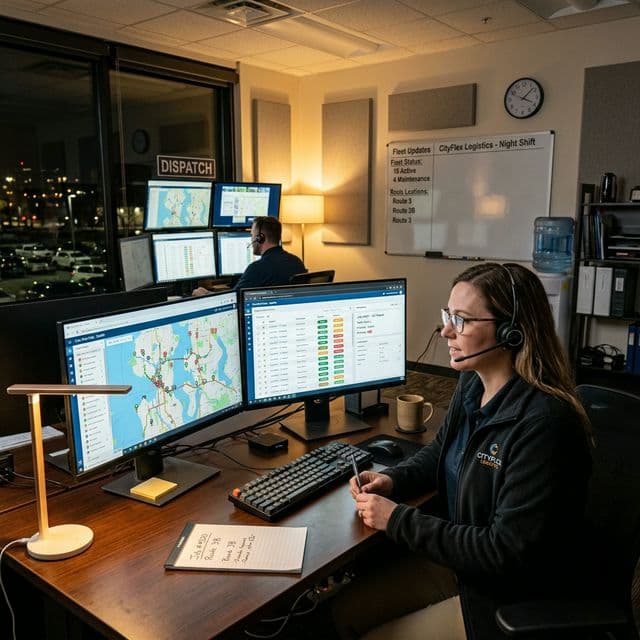
The automation eliminates manual coordination overhead, allowing the dispatcher to focus on exception handling rather than routine scheduling.
Best Practices
- Proactive Scheduling: Use AI-predicted pump cycles based on historical grease accumulation data rather than fixed calendar intervals.
- Digital Documentation: Generate digital manifests and compliance reports automatically after every service visit.
- Customer Communication: Send automated service reminders and completion confirmations via SMS.
- Performance Tracking: Monitor technician efficiency metrics including stops per day, average service time, and customer satisfaction scores.
- Regulatory Compliance: Maintain a digital compliance database that can be exported for health department or municipal inspections on demand.
For a related analysis, read our guide on Emergency vs Scheduled Grease Trap Pricing.
Actuarial Risk Modeling in Commercial Sanitation
To effectively sell preventative maintenance contracts to sophisticated commercial clients, FOG (Fats, Oils, and Grease) operators must elevate their sales pitch from simple fear-mongering to rigorous actuarial risk modeling. When negotiating with a corporate facility manager responsible for a dozen high-volume restaurants, simply stating "you might get a backup if you don't pump the trap" is insufficient. The facility manager requires a mathematical demonstration of risk probability versus the cost of mitigation.
An advanced dispatch and CRM platform allows the operator to generate these actuarial models on demand. The software analyzes historical industry data regarding the frequency and severity of Sanitary Sewer Overflows (SSOs) related to neglected interceptors. It then cross-references this probability against the specific operational parameters of the client's restaurants—such as the volume of deep-fried menu items, the total seating capacity, and the age of the existing plumbing infrastructure.
The resulting model presents a stark financial reality. It outlines the precise cost of the proposed preventative maintenance contract (e.g., four thousand dollars annually per location) and contrasts it with the calculated Expected Value (EV) of a catastrophic failure event. The EV calculation includes the hard costs of emergency extraction and plumbing repair, the municipal fines for environmental discharge, and—most critically—the massive opportunity cost of lost revenue during a mandated health department closure.
When the actuarial model demonstrates that skipping a four-thousand-dollar maintenance contract carries a twenty percent annual probability of triggering a thirty-thousand-dollar catastrophic loss event, the decision for the facility manager shifts from an operational expense debate to a clear risk management imperative. The FOG operator successfully transforms an intangible service into a mathematically justified insurance policy, drastically shortening the sales cycle and justifying premium contract pricing.
Capital Asset Depreciation and Structural Integrity
The Return on Investment (ROI) of preventative maintenance extends beyond avoiding emergency plumbing bills; it directly impacts the long-term capital depreciation of the restaurant's physical infrastructure. A commercial grease interceptor is a massive capital asset, often requiring tens of thousands of dollars to excavate and install.
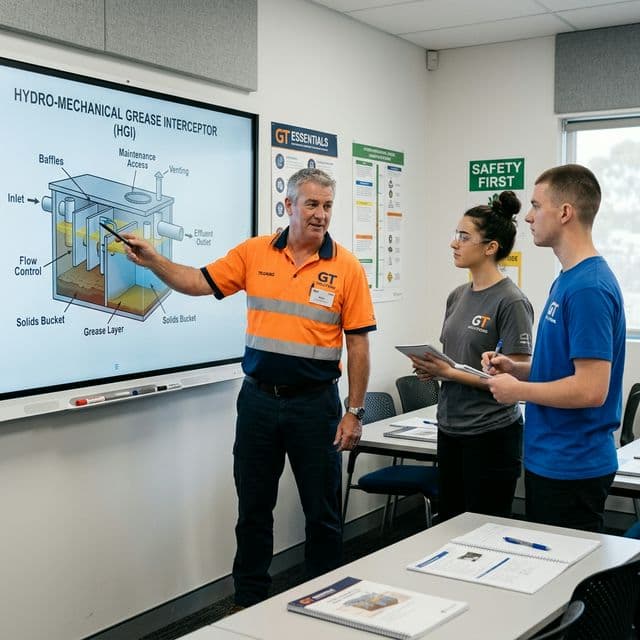
The structural integrity of a concrete interceptor is highly vulnerable to the biological processes that occur when FOG and organic solids are allowed to stagnate. As anaerobic bacteria digest the neglected organic matter, they release hydrogen sulfide gas. In the damp environment of the interceptor, this gas converts to sulfuric acid, which aggressively attacks the concrete walls and baffles, leading to a condition known as microbiologically induced corrosion (MIC).
If a restaurant attempts to save money by extending their pump-out intervals from ninety days to one hundred and eighty days, they accelerate this corrosive process exponentially. An interceptor engineered to last thirty years can suffer catastrophic structural collapse in less than ten years due to severe MIC.
Sophisticated FOG operators leverage this physical reality in their ROI presentations. By utilizing digital dispatch software that mandates technicians to photograph the interior concrete condition during every service event, the operator builds a visual timeline of the asset's health. If the technician observes early signs of pitting or aggregate exposure due to acid corrosion, the software automatically generates a proactive alert for the restaurant owner. The operator can then mathematically demonstrate how increasing the service frequency—and applying biological neutralizing agents—will halt the corrosion, effectively saving the restaurant a fifty-thousand-dollar replacement cost. This approach solidifies the operator's status as an essential infrastructure partner rather than a disposable commodity vendor.
The integration of the Digital Compliance Certificate into the client's corporate auditing workflow elevates the operator's value proposition from simple sanitation to enterprise risk management. By streamlining the annual insurance audit and drastically reducing the client's liability profile, the operator guarantees long-term contract renewal at premium market rates.
The implementation of the Digital Compliance Certificate also drastically simplifies the restaurant's annual corporate auditing process. Corporate auditors require exhaustive documentation regarding environmental liability mitigation. The facility manager can simply provide the auditor with a read-only login to the FOG operator's portal, granting them instant access to years of cryptographically secure service records and instantly passing the environmental audit.
The implementation of a rigorous, software-tracked preventative maintenance program also yields a massive, often overlooked financial benefit: a drastic reduction in commercial insurance premiums. Insurance carriers underwrite commercial kitchen policies based on actuarial risk. A restaurant with a documented history of severe plumbing backups and sanitary sewer overflows is classified as a high-risk entity, resulting in exorbitant property and liability premiums. The FOG operator can supply the restaurant owner with a comprehensive "Digital Compliance Certificate" generated by the dispatch platform. This certificate mathematically proves to the insurance underwriter that the restaurant is adhering to a strict, proactive maintenance schedule that fundamentally mitigates the risk of catastrophic water damage and environmental liability. In many cases, the resulting reduction in the restaurant's annual insurance premium completely offsets the cost of the FOG operator's preventative maintenance contract.