Sending an improperly trained technician to pump a massive commercial grease trap is a massive liability that guarantees compliance failures and catastrophic structural damage. Operators lose thousands of dollars when junior drivers execute "pump and run" services without scraping the baffles. DispatchNode standardizes field execution across the entire fleet by enforcing rigorous, step-by-step digital checklists on the driver's mobile app, ensuring every trap is serviced flawlessly regardless of the technician's experience level.
The Liability of Inconsistent Training
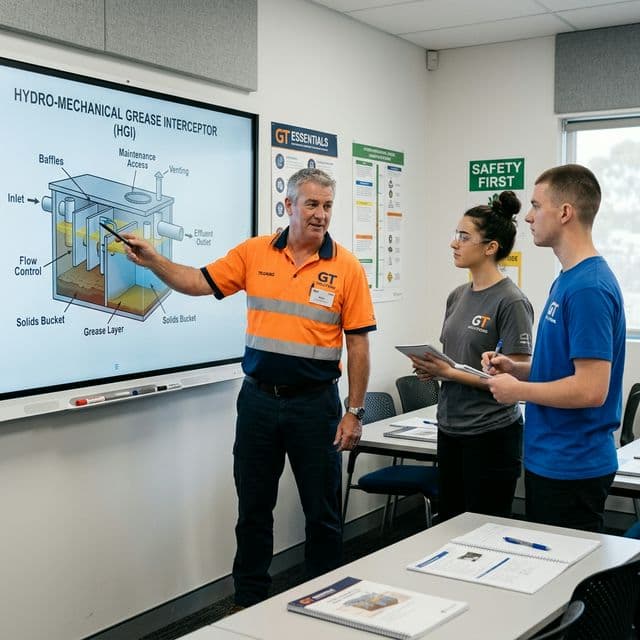
Relying on senior drivers to passively train new hires results in critical knowledge gaps and highly inconsistent service quality across the fleet. DispatchNode eliminates the reliance on subjective training by codifying the absolute perfect pump-out procedure into an immutable digital workflow, legally protecting the operator from municipal fines caused by a technician's negligence in the field.
In a manual operation, a new hire rides along with a senior driver for two weeks and is then handed the keys to a highly expensive vacuum truck. If the senior driver happens to be lazy and routinely skips scraping the hardened FOG off the interceptor baffles, the new hire adopts those exact same lazy habits. This systemic degradation of service quality leads directly to failed municipal health audits for the clients.
The AI-native platform forces standardization at the point of execution. When the junior technician arrives at the restaurant, they open the work order on their tablet. The app does not merely provide the address; it provides a locked, sequential checklist that must be physically acknowledged before the job can be closed.
This process removes all ambiguity. The technician does not have to remember the nuances of FOG compliance; they simply follow the explicit instructions on the screen. This allows the pumping company to rapidly onboard and scale their workforce without suffering the typical dip in service quality associated with hiring inexperienced drivers, dramatically accelerating the growth of the business.
Enforcing the Baffle Scrape and Inspection
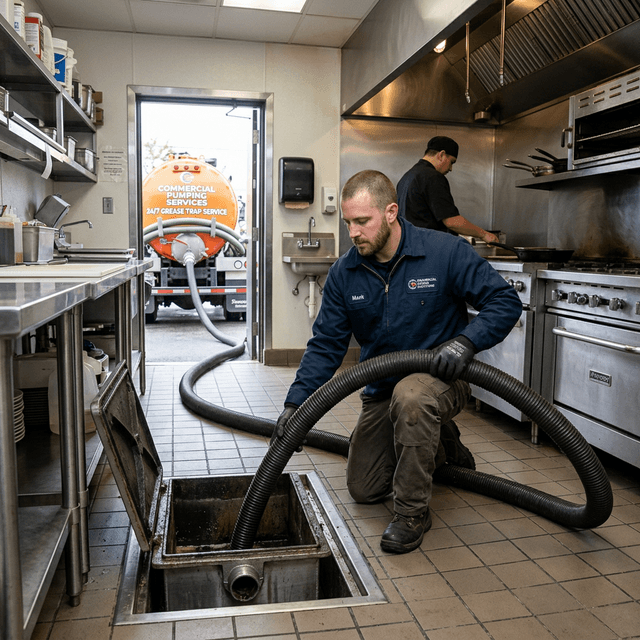
The single most critical step of a grease trap service—and the step most frequently skipped by lazy technicians—is the physical scraping of the concrete baffles and the inspection of the PVC inlet T-pipes. DispatchNode requires the driver to specifically acknowledge the completion of this intense manual labor, providing photographic evidence of the trap's structural integrity before generating the compliance manifest.
Vacuuming the liquid wastewater is easy; wielding a heavy steel scraper to remove calcified grease from the walls of a deep interceptor is exhausting. If this hardened FOG is not removed, the trap loses its separation capacity and rapidly fails the municipal twenty-five percent rule. The software eliminates the temptation to skip this step by requiring photographic proof.
The mobile app prompts the driver: "Baffles Scraped and Inspected. Please attach photo." The driver uses the tablet to take a timestamped photograph of the interior of the empty, fully scraped trap. This photograph is automatically appended to the final digital manifest.
If the driver notices that a concrete baffle is crumbling or a PVC pipe is detached, they flag it immediately in the app. This creates an undeniable record of the damage. By enforcing this strict inspection protocol, the operator completely shields themselves from liability. If the trap fails an inspection a week later due to a broken pipe, the operator has photographic proof that they notified the restaurant manager of the damage during the service.
Verifying Flow and Securing the Site
A flawless pump-out is meaningless if the technician leaves the site with a blocked inlet pipe or an improperly secured, highly dangerous manhole cover. DispatchNode mandates final flow testing and explicit security sign-offs within the digital workflow, ensuring that no truck ever leaves a commercial property in a hazardous or non-compliant state.
After the heavy scraping is complete, the technician must instruct the kitchen staff to run a massive volume of water through the primary sinks to verify the inlet flow. If a hidden blockage exists, the water will back up. The software checklist explicitly asks, "Inlet Flow Verified? Yes/No." If the driver selects "No," the system automatically prompts them to execute a high-pressure hydro-jetting service, converting a problem into immediate revenue.
The final, absolutely non-negotiable step is securing the heavy lids. A loose cast-iron lid in a busy restaurant parking lot is a massive lawsuit waiting to happen. The app requires the driver to sign a digital declaration stating that the lids have been correctly seated and bolted down according to the specific requirements of that asset.
This extreme level of accountability ensures that the operator is never blindsided by a furious phone call from a restaurant owner claiming the driver left their property in a dangerous state. The digital workflow enforces professionalism, protecting both the public and the financial valuation of the pumping company.
Automating Driver Performance Metrics
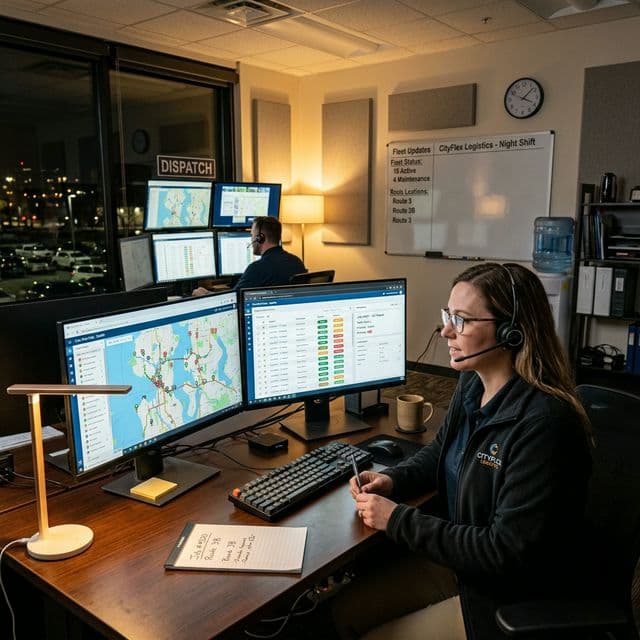
You cannot manage a fleet effectively if you do not know exactly how long a specific service should take; relying on driver estimates leads to massive labor inefficiency and route manipulation. DispatchNode tracks the precise timestamp of every action within the digital checklist, building a highly accurate performance profile for every driver and identifying technicians who require targeted retraining or termination.
By analyzing the data from hundreds of pump-outs, the AI platform establishes a mathematical baseline for every task. It knows that pumping and scraping a standard one-thousand-gallon interceptor should take exactly forty-two minutes. If a specific driver consistently completes the job in twenty minutes, the system flags them for a quality assurance review, knowing they are almost certainly skipping the baffle scrape.
Conversely, if a driver consistently takes eighty minutes to complete the same task, the system flags them for inefficiency. The dispatcher can then review the granular timestamps within the checklist to identify exactly where the driver is struggling, allowing management to provide highly targeted coaching rather than generic, ineffective training sessions.
By weaponizing the data generated by the mobile app checklists, operators achieve absolute command over their workforce. They standardize training, enforce flawless compliance in the field, and ruthlessly eliminate the hidden labor inefficiencies that destroy profit margins in the commercial pumping industry.
Operational Benchmarks for Technician training and certification
| Metric | Industry Average | Best-in-Class Target | Impact |
|---|---|---|---|
| Response Time | 4-8 hours | Under 90 minutes | Captures premium emergency revenue |
| First-Call Resolution | 65% | 92%+ | Eliminates costly return visits |
| Route Efficiency | 4-5 stops/day | 7-9 stops/day | Maximizes technician productivity |
| Contract Retention | 70% annual | 94%+ annual | Compounds recurring revenue |
The OSHA provides regulatory guidelines that directly impact operational benchmarks for grease trap service companies. Meeting these benchmarks consistently requires purpose-built dispatch software, not generic field service tools.
Automated Service Workflow
The automation eliminates manual coordination overhead, allowing the dispatcher to focus on exception handling rather than routine scheduling.
Best Practices
- Proactive Scheduling: Use AI-predicted pump cycles based on historical grease accumulation data rather than fixed calendar intervals.
- Digital Documentation: Generate digital manifests and compliance reports automatically after every service visit.
- Customer Communication: Send automated service reminders and completion confirmations via SMS.
- Performance Tracking: Monitor technician efficiency metrics including stops per day, average service time, and customer satisfaction scores.
- Regulatory Compliance: Maintain a digital compliance database that can be exported for health department or municipal inspections on demand.
For a related analysis, read our guide on Grease Trap Pump-Out Procedures.
Digital Verification and Augmented Workflows
The commercial liquid waste industry faces an acute crisis in skilled labor retention. Training a new pump truck technician is a highly expensive endeavor, requiring the operator to pair a novice with a senior driver for weeks of "windshield time." This halves the productivity of the senior driver and introduces the risk that the novice is simply learning the senior driver's bad habits or procedural shortcuts. When the newly trained technician inevitably encounters a novel situation in the field—such as a complex, multi-stage interceptor system they have never seen before—they frequently freeze, leading to incomplete service and regulatory liability.
Modern dispatch platforms address this training gap by embedding "augmented workflows" directly into the technician's daily operating procedure. The mobile application serves as a real-time, interactive training and verification tool. When a junior technician arrives at a new site, the software does not simply provide an address; it provides a comprehensive digital dossier of that specific interceptor.
This dossier includes historical photographs of the trap's location, detailed schematics of the baffle configuration, and specific hazard warnings (e.g., "Warning: Access lid is located in the high-traffic drive-thru lane; mandatory deployment of four safety cones required").
Crucially, the software enforces a sequential, verifiable workflow. The technician cannot simply press a button to mark the job complete. The app requires them to step through a digital checklist: capturing a pre-service photo, inputting the core sample depths, confirming the application of the specific bioremediation chemical, and capturing the post-service photo of the scraped tank. This rigid, software-enforced procedure ensures that a junior technician on their first solo route executes the pump-out with the exact same rigor and compliance standard as a ten-year veteran, drastically accelerating the onboarding process and reducing the operator's exposure to human error.
Micro-Credentialing and Gamified Retention
Retaining highly trained CDL-licensed technicians is arguably more difficult than hiring them. The physical nature of the work is grueling, and the hours are often volatile. If an operator treats their technicians simply as disposable labor, they will constantly battle massive turnover rates, continuously bleeding capital into the training cycle.
Sophisticated operators are leveraging the granular data collected by their dispatch software to implement micro-credentialing and gamified compensation structures. Because the software tracks every metric of a technician's performance—route efficiency, PTO engagement time, customer satisfaction scores (via automated post-service SMS surveys), and compliance accuracy—the operator has a perfect objective record of the employee's value.
The operator can establish a tiered credentialing system. A new hire starts as a "Level 1 Technician." As the software verifies that they have completed fifty consecutive pump-outs without a single compliance error or safety violation, the system automatically elevates them to "Level 2," unlocking a higher base pay rate or a larger percentage of the route's gross profit.
Furthermore, operators can utilize the software's dashboard to display anonymous fleet-wide leaderboards, tracking metrics like "Most Efficient Route Density" or "Highest Customer Review Average." This introduces positive gamification, tapping into the natural competitiveness of the drivers. By transparently tying compensation and status directly to objective, software-verified performance metrics, the operator builds a culture of extreme accountability and high morale, dramatically improving retention rates in a fiercely competitive labor market.
The visual nature of the training platform also serves as the ultimate defense against regulatory liability. By enforcing a digitally verifiable, language-agnostic workflow, the operator guarantees that every hazardous extraction is completed precisely to standard, safeguarding both the health of the technician and the financial stability of the enterprise.
The visual accessibility of the AR-driven training platform also drastically reduces the operator's legal liability regarding hazardous materials handling. Because the software forces the technician to visually confirm the correct application of neutralizing agents before advancing the workflow, the operator possesses a mathematically unassailable record of safety compliance, protecting the business from catastrophic OSHA fines or worker compensation lawsuits.
The deployment of augmented reality (AR) workflows in technician training also provides a critical linguistic bridge for diverse workforces. The commercial liquid waste industry frequently employs technicians who speak English as a second language. Traditional text-heavy training manuals and complex verbal instructions from senior drivers often result in critical misunderstandings regarding safety protocols and chemical dosing. DispatchNode's mobile application leverages visual, AR-driven interfaces that transcend language barriers. The software utilizes intuitive iconography, color-coded interactive schematics of the interceptor baffles, and universally recognizable visual prompts to guide the technician through the pump-out procedure. Furthermore, the application features real-time, AI-driven translation of any necessary text prompts. This visual and linguistic accessibility ensures that every technician, regardless of their native language, executes the highly technical pump-out procedure flawlessly, maintaining the operator's absolute standard of compliance and safety.