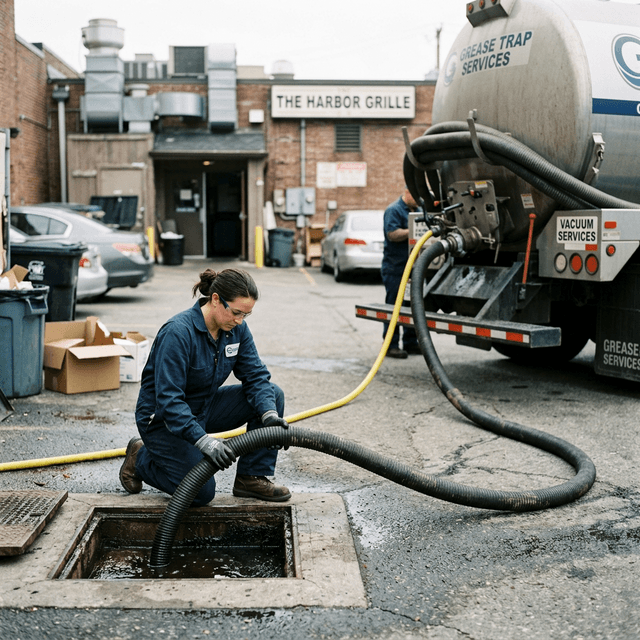
Ignoring seasonal spikes in commercial kitchen volume guarantees overflowing grease traps and furious emergency calls during your clients' most critical revenue windows. When a restaurant's FOG output doubles during the holiday rush, standard quarterly pumping schedules fail instantly. DispatchNode utilizes predictive AI to automatically adjust compliance schedules ahead of seasonal demand spikes, protecting your clients from disastrous shutdowns while maximizing your fleet's revenue capacity.
Predicting the Seasonal Surge
Grease trap accumulation is not a static process; it is heavily dictated by the seasonal fluctuations of the restaurant industry. DispatchNode analyzes historical pumping data alongside localized calendar events to accurately forecast exact volumetric surges, automatically pulling service dates forward for high-risk accounts before their interceptors breach the municipal twenty-five percent limit.
A massive tourist destination experiences radically different FOG output in July compared to February. If a pumping operator stubbornly adheres to a rigid ninety-day service schedule, the high-volume restaurants will inevitably suffer catastrophic backups during their peak season. This reactive approach destroys client trust and exposes the restaurant to massive health department fines.
The AI platform eliminates this risk by building a dynamic demand model for every specific commercial client. It recognizes that a sports bar near a stadium will require hyper-accelerated pumping during the football season, while a coastal seafood restaurant will require maximum capacity during the summer months. The system automatically adjusts the recurring schedule, increasing the pumping frequency exactly when the client needs it most.
This predictive capability is a massive competitive differentiator. The operator does not wait for the restaurant manager to call in a panic; the software proactively notifies the client: "Based on historical volume data for the upcoming holiday season, we have temporarily upgraded your service frequency to bi-weekly to guarantee compliance and prevent any backups." The client gladly pays the increased frequency fee for the guaranteed peace of mind.
Optimizing Fleet Capacity for Peak Season
When seasonal demand surges across an entire region, pumping operators who fail to forecast capacity will be forced to turn away highly lucrative emergency jobs because their trucks are already fully committed. DispatchNode provides long-term capacity forecasting, allowing operators to optimize their driver schedules and secure necessary rental equipment months before the peak season hits.
A sudden, unexpected spike in emergency calls is only profitable if the operator has the physical vacuum capacity to service them. If every truck is already running twelve-hour shifts just to maintain the baseline compliance contracts, the operator is bleeding potential revenue. They must decline emergency dispatches, handing high-margin contracts directly to their competitors.
The software analyzes the upcoming sixty-day pipeline. It aggregates the volume of all scheduled compliance pump-outs and compares it against the total maximum capacity of the active fleet. If the system detects a projected shortfall—for example, projecting a demand of fifty thousand gallons in a week where the fleet can only pump forty thousand—it instantly flags the bottleneck for management.
Armed with this data, the business owner can execute strategic capacity expansions. They can authorize aggressive overtime for the drivers, run secondary night shifts to utilize the trucks twenty-four hours a day, or secure a short-term lease on an additional vacuum truck. Because the AI predicted the shortfall months in advance, the operator avoids the exorbitant pricing associated with last-minute equipment rentals.
The Impact of Weather on Winter Operations
Seasonal planning is not limited to restaurant volume; severe winter weather fundamentally alters the physical logistics of grease trap pumping. DispatchNode recalibrates routing algorithms to account for the massive delays associated with frozen access roads, buried interceptor lids, and the specialized winterization procedures required to protect the vacuum fleet from catastrophic freeze damage.
When the temperature drops below freezing, the time required to service a large outdoor gravity interceptor skyrockets. A lid that takes two minutes to remove in July might require twenty minutes of aggressive de-icing with a blowtorch in January. If the dispatcher fails to account for this increased time-on-site, the driver will inevitably fall behind schedule, leading to missed stops and compliance failures.
The AI routing engine dynamically adjusts the labor projections for every outdoor asset based on real-time winter weather APIs. It automatically reduces the total number of stops assigned to a specific driver during a severe freeze, ensuring they have the necessary time to safely and effectively complete the pump-outs without rushing and causing structural damage to the interceptor or the truck.
Furthermore, the system forces drivers to execute strict end-of-shift winterization checklists via the mobile app. The driver must confirm that all primary hoses are drained, valves are left open, and antifreeze has been cycled through the heavy-duty pump casing. This automated accountability prevents the incredibly expensive scenario of a cast-iron pump cracking overnight in the yard.
Capitalizing on Competitor Failures
Peak seasons expose the operational weaknesses of legacy pumping companies; when their manual schedules collapse, their clients are left abandoned. DispatchNode equips aggressive operators with the AI tools required to absorb massive influxes of highly lucrative emergency calls from abandoned restaurants, instantly routing available trucks to secure new, desperate clients and converting them into long-term contracts.
When a disorganized competitor fails to forecast seasonal demand, they inevitably miss scheduled compliance dates. Their clients experience backups and immediately start calling every pumping company in the area. The operator utilizing AI is perfectly positioned to capture this market share. Their AI voice agent answers the frantic calls instantly, quoting premium emergency rates and dispatching trucks that were specifically held in reserve for these high-margin opportunities.
The emergency dispatch is just the initial strike. The system automatically follows up with the new client the next morning, generating a detailed proposal for a recurring compliance contract. The pitch is undeniable: "Your previous vendor abandoned you during your busiest week. Our predictive software guarantees that will never happen again."
By mastering the extreme fluctuations of seasonal demand, grease trap operators utilize DispatchNode to protect their existing portfolio from compliance failures while ruthlessly acquiring new market share from unprepared competitors, ensuring massive profitability regardless of the season.
Operational Benchmarks for Seasonal grease volume fluctuations
| Metric | Industry Average | Best-in-Class Target | Impact |
|---|---|---|---|
| Response Time | 4-8 hours | Under 90 minutes | Captures premium emergency revenue |
| First-Call Resolution | 65% | 92%+ | Eliminates costly return visits |
| Route Efficiency | 4-5 stops/day | 7-9 stops/day | Maximizes technician productivity |
| Contract Retention | 70% annual | 94%+ annual | Compounds recurring revenue |
The EPA provides regulatory guidelines that directly impact operational benchmarks for grease trap service companies. Meeting these benchmarks consistently requires purpose-built dispatch software, not generic field service tools.
Automated Service Workflow
The automation eliminates manual coordination overhead, allowing the dispatcher to focus on exception handling rather than routine scheduling.
Best Practices
- Proactive Scheduling: Use AI-predicted pump cycles based on historical grease accumulation data rather than fixed calendar intervals.
- Digital Documentation: Generate digital manifests and compliance reports automatically after every service visit.
- Customer Communication: Send automated service reminders and completion confirmations via SMS.
- Performance Tracking: Monitor technician efficiency metrics including stops per day, average service time, and customer satisfaction scores.
- Regulatory Compliance: Maintain a digital compliance database that can be exported for health department or municipal inspections on demand.
For a related analysis, read our guide on Grease Trap Sizing and Interceptor Capacity.
Predictive Weather Integration and Capacity Surges
The volume of Fats, Oils, and Grease (FOG) entering a municipal sewer system is highly correlated with seasonal culinary trends, but it is also acutely sensitive to sudden, severe weather events. Operators who rely solely on historical calendar data to predict demand will inevitably find their fleets overwhelmed during unexpected environmental anomalies.
Consider the impact of a sudden, unseasonal blizzard in a major metropolitan area. While fine dining establishments may see a drop in reservations, fast-food and delivery-heavy restaurants often experience a massive surge in volume as the population hunkers down and orders comfort food—which is predominantly fried and highly grease-intensive. If this blizzard occurs exactly when a large percentage of the local restaurant sector is already approaching their maximum interceptor capacity, the system experiences a synchronized failure event.
Advanced FOG dispatch software integrates directly with long-range meteorological APIs to execute predictive capacity planning. When the software detects a high probability of a severe weather event ten days out, it automatically cross-references this forecast against the volumetric status of every interceptor in the active client portfolio.
The algorithm identifies "high-risk" accounts—restaurants whose interceptors are projected to be at eighty percent capacity or higher during the predicted weather event. The AI agent then automatically generates proactive outbound communications to these clients, suggesting an early preventative pump-out to ensure their infrastructure can handle the anticipated surge in delivery volume without backing up into their kitchens during a snowstorm. This predictive intervention not only saves the client from a catastrophic operational failure but also allows the operator to smooth out their dispatch curve, securing the revenue in a controlled manner before the storm hits and the roads become impassable.
Capital Asset Reallocation During Off-Peak Seasons
The financial danger of seasonal demand volatility is the risk of holding expensive capital assets—specifically, high-capacity vacuum trucks—that sit idle during the off-peak season. In regions with heavily seasonal economies, such as coastal tourist destinations or ski resorts, FOG extraction demand can drop by fifty percent or more when the tourist season concludes. A fleet perfectly sized for the peak summer months will bleed cash through depreciation and fixed insurance costs during the winter.
Sophisticated operators utilize their dispatch platforms to execute strategic capital asset reallocation. The software tracks the precise utilization rate and profitability of every truck in the fleet. As the seasonal demand curve begins to decline, the software alerts the operations manager to initiate the reallocation protocol.
Instead of allowing three trucks to sit idle in the yard, the operator can temporarily lease these assets, complete with drivers, to allied industries experiencing inverse seasonal demand spikes. For example, the trucks might be contracted to municipal water authorities for storm drain clearing prior to the rainy season, or to industrial manufacturing facilities for annual holding tank maintenance during holiday shutdown periods.
Because the dispatch software maintains total telematics visibility, the operator can confidently deploy their assets into these alternative revenue streams while still meticulously tracking PTO hours, fuel consumption, and driver compliance. This strategic agility, driven by deep data visibility, transforms off-peak seasons from periods of financial survival into opportunities for diversified, high-margin revenue generation, drastically improving the overall annual Return on Capital Employed (ROCE) for the fleet.
The aggressive management of digital disposal capacity requires rigorous capital planning within the software ecosystem. By automating the advanced payment and reservation logic required by municipal facilities, the operator protects their operational flow during critical demand surges, completely eliminating the risk of stranded logistical assets.
The ability to digitally reserve disposal capacity during seasonal demand surges also requires sophisticated cash flow management within the dispatch platform. Municipal facilities frequently require pre-payment or massive security deposits to reserve tipping volume. The software automatically calculates these required capital outlays and temporarily adjusts the payment terms for new commercial contracts, ensuring the operator maintains sufficient liquidity to secure the necessary disposal infrastructure.
The execution of successful seasonal capacity planning also requires aggressive supply-chain management regarding disposal facilities. During periods of massive regional demand—such as the week following a major city-wide festival—municipal wastewater treatment plants frequently reach their maximum processing capacity for FOG and institute emergency tipping quotas, turning away pump trucks. An operator who perfectly anticipates the surge in extraction demand but fails to secure disposal capacity will find their fleet paralyzed, full of waste with nowhere to dump it. Advanced dispatch platforms integrate directly with the APIs of multiple regional disposal facilities, monitoring their real-time processing capacity and current tipping fees. The software allows the operator to digitally reserve disposal volume in advance of the projected seasonal surge, ensuring uninterrupted operational flow and preventing the catastrophic financial losses associated with stranded, fully-loaded vacuum trucks.